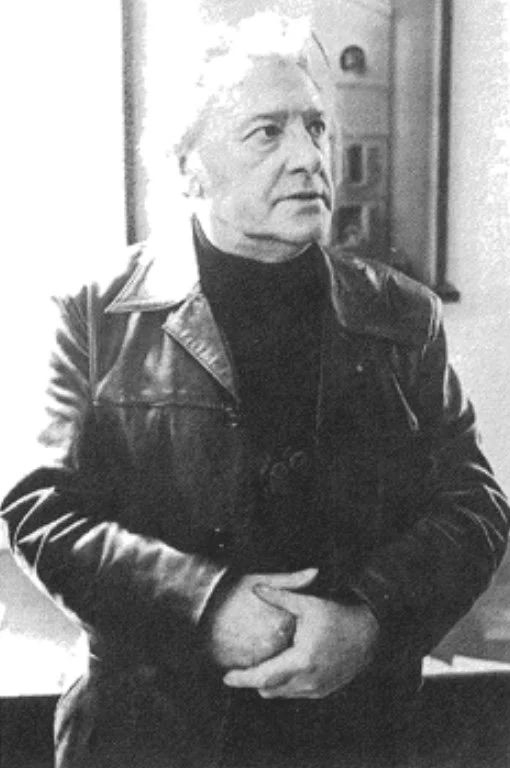
L. P. Boon
ENGLISH BELOW
Men heeft mij ooit laten opdraven in een roman van Louis Paul Boon. De paradijsvogel, meen ik. Een goede titel. Alsof men vermoedde dat sommige figuren niet in kooien thuishoren maar af en toe op een tak verschijnen, een paar woorden krassen en weer verdwijnen.
Ik heb het Boon nooit kwalijk genomen. Hij had mij niet uitgevonden; hij had mij slechts herkend. Zoals men een oude bekende herkent in een menigte en zegt: daar loopt hij weer, die Ramadhoe, altijd opduikend waar het over schoonheid en verwarring gaat. En ja, misschien — laat mij dat hier achteloos laten vallen — was hij mij deels zelf wel. Of omgekeerd. Men weet nooit precies wie wie gebruikt wanneer het over schoonheid gaat.
Wat er ook van zij, laat mij dus, nu men beweert dat mijn dagen geteld zijn, nog eenmaal iets zeggen over dat onderwerp dat mij mijn hele leven vergezelde: de borst.
U denkt misschien dat dit een schunnige tekst wordt. Dat is een begrijpelijke vergissing. Maar ik heb nooit de vorm bemind; ik heb de vormeloosheid bemind.
Wat is een borst? Men zou kunnen antwoorden met maten, gewichten, contouren. Maar wie werkelijk kijkt, merkt dat geen enkele beschrijving standhoudt. Zij ontsnappen voortdurend aan hun eigen vastlegging. Wat men denkt te zien, verandert onder een andere lichtval, onder een andere stof, onder een andere blik.
En dan is er de beha — wat een uitvinding. Men denkt dat zij vorm geeft, fixeert, disciplineert. Maar in waarheid is zij een choreograaf. Zij organiseert een verschijning. Dezelfde borst verschijnt onder verschillende beha’s als een ander wezen: streng, speels, verheven, bijna ascetisch. Het vormeloze wordt niet tot één vorm gekneed; het wordt uitgenodigd zich telkens anders te tonen.
Het is een dans van verschijningen.
Men begrijpt hier iets wat de filosofie van de horror al langer weet: de diepste ontregeling komt niet van wat men kan aanwijzen, maar van dat wat zich niet laat stabiliseren. Het monster is niet dat wat men ziet, maar dat wat zich aan elke definitie onttrekt. De borst is geen monster — zij is te gul voor dat woord — maar zij deelt met het monster dat vermogen om het verstand zijn zekerheden te ontnemen.
Men denkt dan dat de vrouw die macht bezit. Dat zij de sleutel draagt tot het mysterie.
Maar ook zij staat ertegenover.
Ik heb vrouwen gezien die zelf verstomden onder de kracht die van hen uitging. Zij spelen het spel, ja. Soms met ironie, soms met ernst. Maar zij bezitten het niet. Zoals een auteur zijn personages niet bezit. Zoals Boon mij niet bezat.
Wij projecteren achter de borst een ultieme macht, alsof daar een alwetende instantie schuilgaat. Zoals men achter een tekst een almachtige auteur projecteert. Maar de waarheid is eenvoudiger en tegelijk ontregelender: wij zijn allen in de greep van hetzelfde veld.
De borst is geen godin. Zij is een oppervlak waarop transcendentie zich verraadt in het meest concrete. Dat wat niet te beheersen is, maar zich toch toont. Dat wat zich niet laat reduceren tot begrip, maar evenmin tot mystiek kan worden opgeblazen zonder belachelijk te worden.
Velen zijn hier gestrand. Zij wilden bezitten. Zij wilden doorstoten tot het geheim. Zij meenden dat er achter de vorm een laatste kern schuilging, een waarheid die men kon vasthouden.
Maar iedere poging tot definitieve onthulling onthult slechts een nieuwe verschuiving. Wat zich laat zien, laat zich nooit volledig hebben. “If you have her, why can’t you have her?” vroeg een andere schrijver. Omdat het hebben zelf de illusie is.
Ik heb geleerd het anders te zien.
Erotiek is geen verovering; zij is een spel. Een heilig spel, indien men dat woord nog durft te gebruiken zonder te blozen. Men gaat maximaal op in de illusie om haar juist daardoor te doorzien. Men speelt met de verschijning, niet om haar te ontmaskeren, maar om samen te ontdekken dat zij geen vast fundament heeft.
En daar, in die wederzijdse erkenning, verandert de vrouw van godin in mede-speler. Geen alwetende instantie die het geheim bezit, maar een andere transcendentie, even zoekend, even glimlachend.
Misschien is dat wat ik mijn hele leven heb willen zeggen.
Men heeft mij een borstenman genoemd. Dat is niet onjuist. Maar men vergat eraan toe te voegen dat ik vooral een bewonderaar was van het onvatbare.
Men zegt mij dat ik weldra sterf. Dat is mogelijk. Het lichaam heeft zijn afspraken met de tijd, en ik ben niet iemand die administratieve formaliteiten wil tegenwerken.
Maar laten wij ernstig blijven: wie denkt dat hij van mij verlost zal zijn, vergist zich.
Ik ben nooit uitsluitend van vlees geweest.
Wanneer een borst zich toont en zich tegelijk onttrekt.
Wanneer een beha haar rol speelt en niemand meer weet wie het stuk heeft geschreven.
Wanneer men even niet weet of men bewondert of bewonderd wordt.
Daar ben ik.
Immer de uwe.
Ps: Over Boons 'De paradijsvogel' schreef ik eerder hier
ENGLISH
I was once made to appear in a novel by Louis Paul Boon. De paradijsvogel, I believe. A good title. As though someone suspected that certain figures do not belong in cages, but occasionally perch on a branch, scratch out a few words, and disappear again.
I never held it against Boon. He did not invent me; he merely recognised me. The way you recognise an old acquaintance in a crowd and say: there he is again, that Ramadhoe, always turning up whenever beauty and confusion are at stake. And yes, perhaps — let me casually drop this here — perhaps he was partly me himself. Or the other way around. When it comes to beauty, one never quite knows who is using whom.
Whatever the case, now that people claim my days are numbered, allow me to say something one last time about the subject that accompanied me throughout my life: the breast.
You may think this is going to be a vulgar text. That is an understandable mistake. But I have never loved form; I have loved formlessness.
What is a breast? One might answer with measurements, weights, contours. But anyone who truly looks will notice that no description ever holds. They constantly escape the forms imposed upon them. What you think you see changes with a different light, a different fabric, a different gaze.
And then there is the bra — what an invention. One imagines that it gives shape, fixes, disciplines. But in truth, it is a choreographer. It organises an appearance. The same breast appears beneath different bras as a different creature: stern, playful, exalted, almost ascetic. The formless is not moulded into a single form; it is invited to reveal itself differently each time.
It is a dance of appearances.
Here one begins to understand something that the philosophy of horror has known for some time: the deepest disturbance does not come from what can be pointed to, but from what refuses to be stabilised. The monster is not what one sees, but what escapes every definition. The breast is no monster — it is far too generous for such a word — but it shares with the monster that power to deprive the mind of its certainties.
One might then think that the woman possesses that power. That she holds the key to the mystery.
But she, too, stands before it.
I have seen women themselves fall silent before the force that emanated from them. They play the game, yes. Sometimes ironically, sometimes seriously. But they do not possess it. Just as an author does not possess their characters. Just as Boon did not possess me.
We project an ultimate power behind the breast, as though an omniscient presence were hiding there. Just as we project an all-powerful author behind a text. But the truth is simpler and, at the same time, more unsettling: we are all caught within the same field.
The breast is not a goddess. It is a surface upon which transcendence betrays itself in the most concrete of forms. That which cannot be controlled, yet reveals itself. That which cannot be reduced to understanding, but which cannot be inflated into mysticism either without becoming ridiculous.
Many have come to grief here. They wanted to possess. They wanted to penetrate the mystery. They believed that behind the form there was some final core, a truth they could hold in their hands.
But every attempt at definitive revelation reveals only another shift. What reveals itself can never be fully possessed. “If you have her, why can’t you have her?” asked another writer. Because possession itself is the illusion.
I have learned to see it differently.
Eroticism is not conquest; it is a game. A sacred game, if one still dares to use that word without blushing. One gives oneself completely to the illusion precisely in order to see through it. One plays with appearance, not to expose it, but to discover together that it has no fixed foundation.
And there, in that mutual recognition, the woman ceases to be a goddess and becomes a fellow player. Not an omniscient presence that possesses the secret, but another form of transcendence, equally searching, equally amused.
Perhaps that is what I have been trying to say all my life.
They called me a breast man. That is not inaccurate. But they forgot to add that above all, I was an admirer of the unfathomable.
They tell me I am soon to die. That may be so. The body has its own arrangements with time, and I am not a man inclined to interfere with administrative formalities.
But let us be serious: anyone who thinks they will be rid of me is mistaken.
I was never made entirely of flesh.
When a breast reveals itself and withdraws at the same time.
When a bra plays its part and no one knows anymore who wrote the play.
When, for a moment, one no longer knows whether one is admiring or being admired.
That is where I am.
Yours, always.