Sitting down together alone - on posture in meditation
After a ten-day Vipassana retreat in Lukla, Nepal, I’ve been trying to meditate in the morning and in the evening. Trying is the right word. Sometimes it happens, sometimes it doesn’t. I don’t keep score. When it works, it works. When it doesn’t, it is just as well.
I mentioned this recently to a close friend of mine, Tis. With his usual infectious enthusiasm, he told me he’d been meditating too, on and off, and that he always noticed an effect fairly quickly. We talked about breathing, naturally. And then about posture. About sitting.
That infamous sitting.
At the retreat they were quite uncompromising about it. You sat on the floor, in an open hall, no walls to lean against, no concessions to the spine. Cross-legged, or something very close to it. Call it lotus, half-lotus, Burmese posture — the names don’t matter much when your knees are screaming. It hurt. A lot.
For years I had thought all this posture talk was exaggerated. You could just as well sit on a chair, I believed, as long as your back was straight and you weren’t collapsing into yourself. And in principle, I still think that’s true.
But I had underestimated something.
Tis said there was something special about that posture. Something about how it felt. Maybe energy flows more freely, he suggested.
Could be. I honestly don’t know. But what I do know is that also something else is at work there.
These days I mostly sit cross-legged myself. Not heroically. I’ve cheated. I sit with my back against a wall and one or two cushions under my backside, slightly tilted forward. That way my knees don’t carry the full weight of my metaphysical and existential ambitions, and my spine gets a bit of help. Comfort matters. Not to make meditation “easy”, but to remove unnecessary noise.
And here’s the thing: even with these small adjustments, the posture does something.
Not just physically. Symbolically.
That way of sitting is a cultural gesture. When you see someone sitting like that, you immediately read something into it: attention, stillness, maybe wisdom, or at least the intention to be wise. The posture carries meaning before you ever inhabit it.
And that is exactly how our self-awareness works. Mimetic. We see someone sit like that. Later we sit like that ourselves. And suddenly we are looking at ourselves the way we once looked at them.
The posture gives you a role you can step into.
When I sit down now, I don’t merely sit. I become “someone who meditates.” Not through effort, not through discipline, but through form. Through posture. My body remembers before my mind has any opinions.
And it doesn’t stop there.
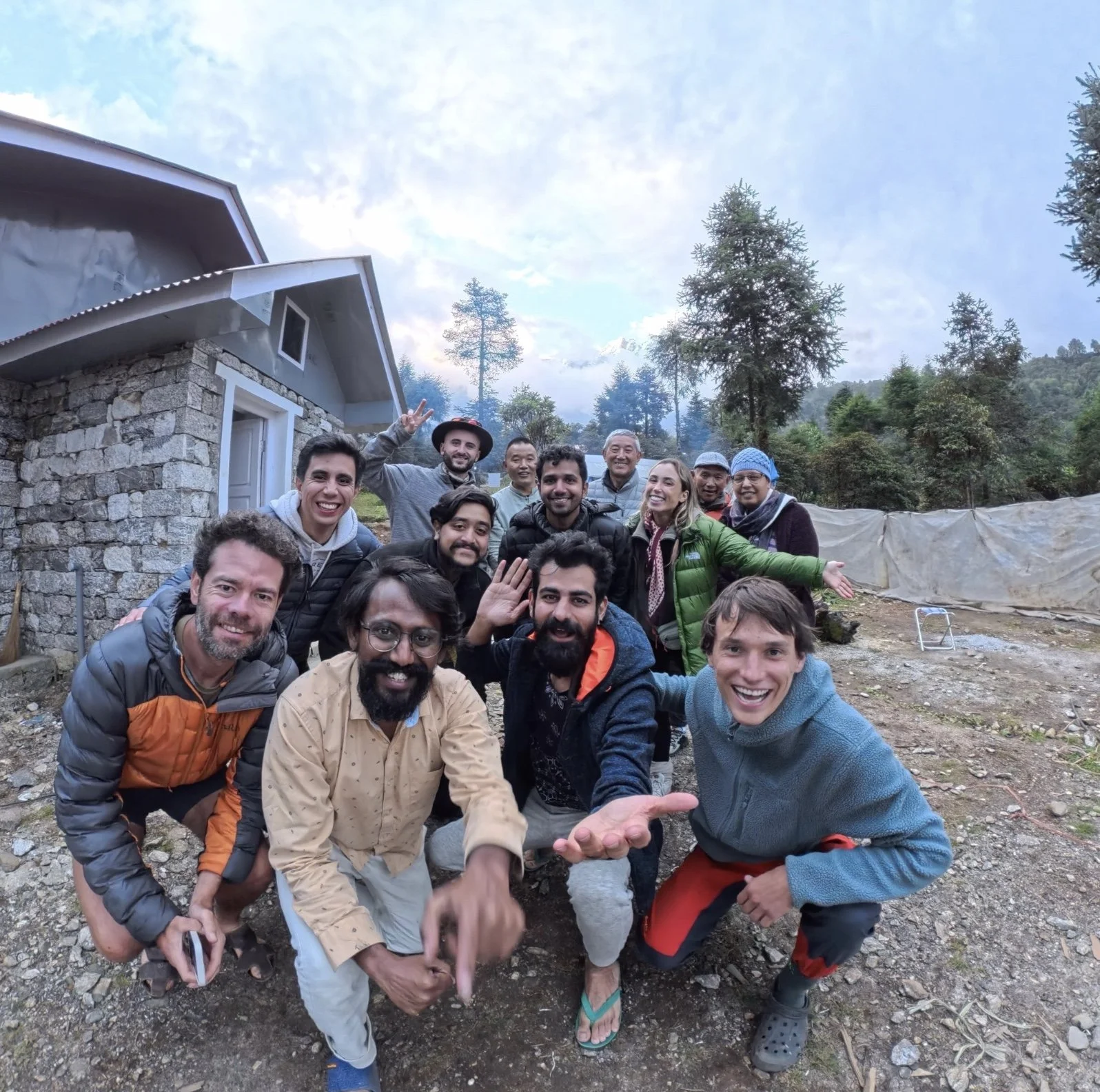
Because that posture also summons others. People I sat with in Nepal. Tis, of course. Bert. Vlad. Akash. Poesp Raz. Divyansu. Miguel. Mareike. Ashish. Lucas. And Teacher of course ;) Via that posture their presence still somehow lingers. Just by sitting like that, they appear. Not as mental images, not as nostalgic thoughts, but as something bodily familiar.
My body remembers sitting with them.
That’s one of the reasons meditation has become genuinely enjoyable for me.
And I want to be clear about that word: enjoyable.
Meditation is not a discipline. Or at least, it shouldn’t start there. The same goes for running, by the way. People who say they “have to” run because it’s healthy are usually miserable runners. That whole moralised cult of jogging — as if everyone should run, regardless of inclination — is nonsense. Do what you enjoy. Skate if you like skating. Swim if you like swimming. Move in the way that fits your nature.
Enjoyment is not frivolous. It’s diagnostic. It tells you what belongs to you and what doesn’t.
Basic Taoism, that.
Meditation is no different. You don’t do it because you should. You do it because, somehow, it wants to be done. Because it fits. Because it’s pleasant to sit down and see what happens.
And yes, one of the reasons it’s pleasant, is the posture. It may help energy flow, who knows. But it also helps something else flow: memory, connection, belonging. Through that posture, a whole community quietly sits down with me. Friends, fellow practitioners, a lineage of sorts.
It just makes it, for me at least, a little more alive.
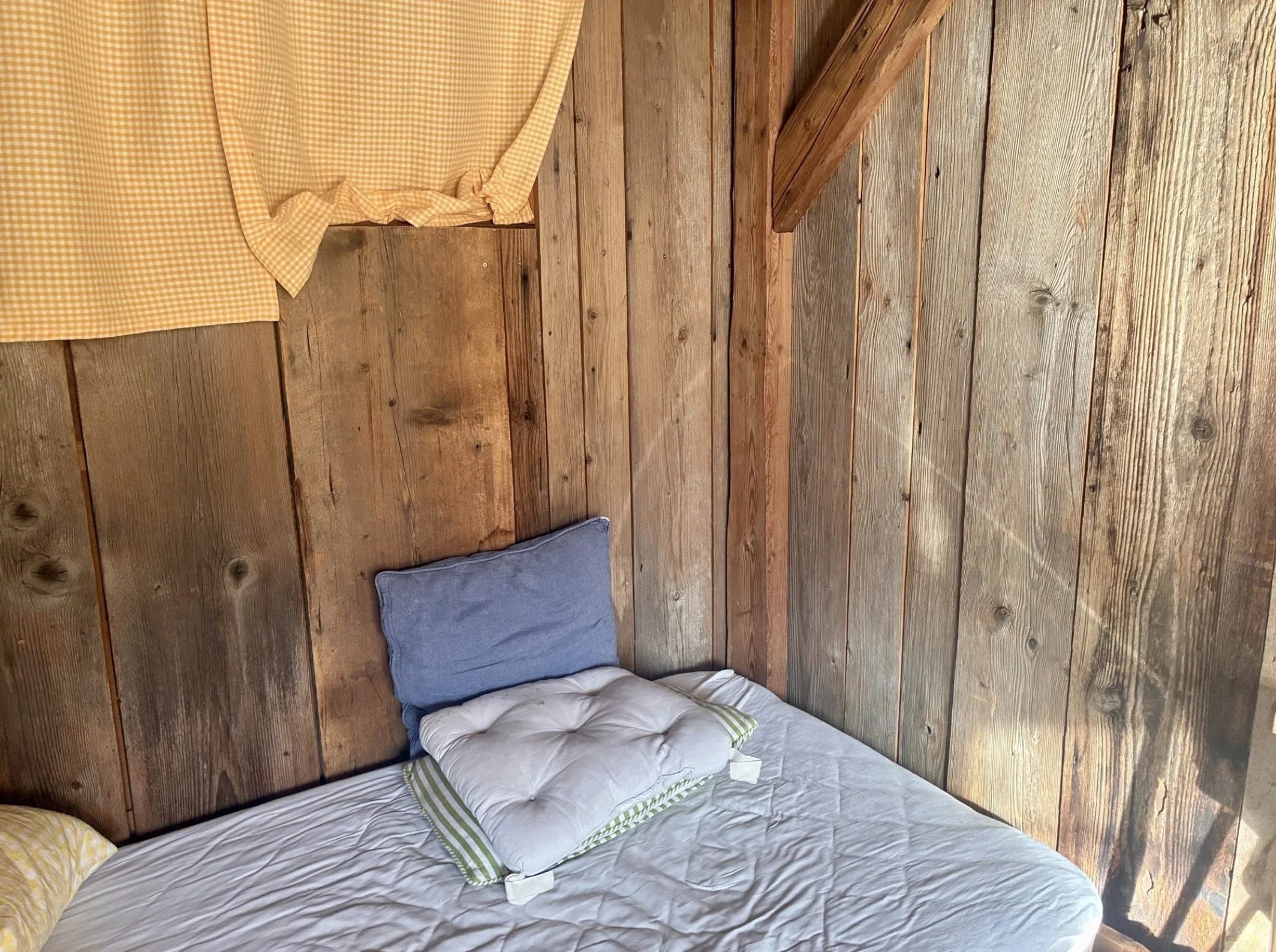
These weeks, I try to sit every morning and evening on my bed, in a small room in Schoppernau in the Alps. And without trying to improve myself, without chasing insight, I find myself in good company.
They’re not there.
And yet they are.
My friends. My fellow practitioners. Teacher.
I sit together with them.
And that, honestly, is a very pleasant way to start and end a day.
PS: If you’re curious about how bodily gestures install self-consciousness by creating distance toward ourselves, see my recent philosophical-anthropological essay The Breathing Mind. Or in dutch: Geestesadem.